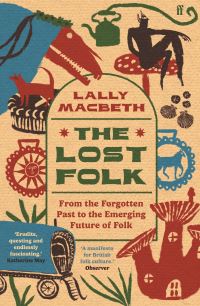
The Lost Folk

£12.99

By its nature, folk is ephemeral: tricky to define, hard to preserve and even more difficult to resurrect. But folk culture is all around us; sitting in our churches, swinging from our pubs and dancing through our streets, patiently waiting to be discovered, appreciated, saved and cherished. In this book, Lally MacBeth is on a mission to breathe new life into these rapidly disappearing customs. She reminds us that folk is for everyone, and does not belong to an imagined, halcyon past, but is constantly being drawn from everyday lives and communities. As well as looking at what folk customs have meant in Britain’s past, she shines a light on what they can and should mean as we move into the future – encouraging us to use the book as an inspiration, and become collectors and creators of our very own folk traditions.

Pre-order

Scheduled for publication on 23rd April, 2026
The book will be available on or after this date. If you would like to preorder a copy, we will notify you when it is ready to collect.

SKU: 9780571388318 Category: Tags: , , Publisher/imprint : Faber & Faber
Page count : 320
Published on 23rd April, 2026

Description

‘An exceptionally thoughtful and beautifully written.’ Maxine Peake
‘Erudite, questing and endlessly fascinating . . . the book that British folk has long needed.’ Katherine May
‘A splendid museum full of strange and wonderful things.’ Peter Ross

A fresh and engaging celebration of the customs, places, objects and peoples that make up what we know as ‘folk’ in Britain.

By its nature, folk is ephemeral: tricky to define, hard to preserve and even more difficult to resurrect. But folk culture is all around us; sitting in our churches, swinging from our pubs and dancing through our streets, patiently waiting to be discovered, appreciated, saved and cherished.

In The Lost Folk, Lally MacBeth is on a mission to breathe new life into these rapidly disappearing customs. She reminds us that folk is for everyone, and does not belong to an imagined, halcyon past, but is constantly being drawn from everyday lives and communities. As well as looking at what folk customs have meant in Britain’s past, she shines a light on what they can and should mean as we move into the future – encouraging us to use the book as an inspiration, and become collectors and creators of our very own folk traditions.

Additional information

Dimensions 19.8 × 12.9 cm
Author

Publisher

Imprint

Cover

Pages

Language

Edition
Dewey

Readership