Description
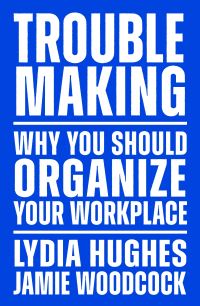
There has been an explosion of organising among workers many assumed to be unorganisable, from delivery drivers in London to tech workers in Silicon Valley. The culmination of years of conversations on picket lines, in community centres, and in union offices, with workers in Britain, the US, India, Argentina, South Africa, Brazil, and across Europe, Troublemaking brings together lessons from around the world. Precarious workers waste collectors in Mumbai show that no worker is “unorganisable”, cleaner organising at LSE and St Mary’s hospital in London and Sans-papier workers in France indicate that demanding more at work can lead to big wins. Struggles like The Water Wars in Cochabamba, Bolivia show how we can use our power beyond the workplace.
From these movements, Lydia Hughes and Jamie Woodcock draw a number of lessons about why organising at work is the first step in building another world. They put forward three principles for organising. First, the need for action. Struggles can change the world, but they also change people who go through them. Rather than using action as a last resort, we need action to build a movement. Second, the need to build the rank-and-file of unions. Power comes from organising at work, not in trusting others to do it on our behalf. Third, democracy matters in organising. This is not only about winning, but also developing the confidence to build another kind of world. This is not a “how to” guide, but a set of principles for the politics of organising.