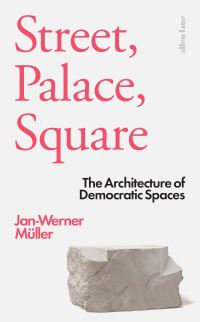
Street, Palace, Square

£20.00

Building requires power and resources – then, once created, our environment structures how we relate to each other. But what would a distinctly democratic built environment look like? Should we prioritize an inclusive process by which as many citizens as possible can decide how a building is designed? Or is it about how architecture and urban spaces can best represent democracy to citizens – and how building and city planning can concretely facilitate democratic action by citizens? In ‘Street, Palace, Square’, political theorist Jan-Werner Müller offers an elegant new account of architecture and democracy that draws on examples from Washington DC to Dhaka, Cairo to Berlin. Ranging widely across political philosophy, history and design, he shows that bringing architecture and democracy together has an unexpected benefit.

In stock

One copy is currently available in store.
This title can be ordered for collection in store or for home delivery.
If you require more copies than we have available in the shop we can order these for you – this usually just takes a day or two, but we will confirm the expected timeframe when an order is placed.

SKU: 9780241382035 Category: Tag: Publisher/imprint : Allen Lane
Page count : 208
Published on 7th May, 2026

Description

Building requires power and resources – then, once created, our environment structures how we relate to each other. But what would a distinctly democratic built environment look like? Should we prioritize an inclusive process by which as many citizens as possible can decide how a building is designed? Or is it about how architecture and urban spaces can best represent democracy to citizens – and how building and city planning can concretely facilitate democratic action by citizens?

In Street, Palace, Square, political theorist Jan-Werner Müller offers an elegant new account of architecture and democracy that draws on examples from Washington DC to Dhaka, Cairo to Berlin. Ranging widely across political philosophy, history and design, he shows that bringing architecture and democracy together has an unexpected benefit. As we reflect on spaces and symbols on the one hand and our understandings of democracy on the other, we might see possibilities we did not see before: how to create spaces for citizens to make politics their own.


Additional information

Weight 0.4 kg
Dimensions 22.2 × 13.8 × 2.5 cm
Author

Publisher

Imprint

Cover

Pages

Language

Edition
Dewey

Readership