Description
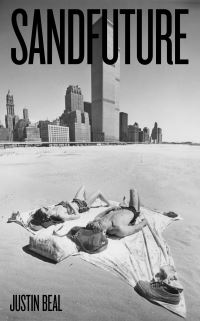
In Sandfuture, artist Justin Beal considers the life of the architect Minoru Yamasaki (1912-1986), who remains on the margins of architectural history despite the enormous influence of his work. That Yamasaki’s most famous projects–the Pruitt-Igoe Apartments in St. Louis and the original World Trade Center in New York–were both destroyed on national television, thirty years apart, makes his relative obscurity all the more remarkable. Beal’s account of Yamasaki’s life and work converges with his own investigation of architecture’s role in culture, undertaken as he saw New York change dramatically in the wake of a decade bracketed by terrorism and natural disaster. Writing lucidly and elegantly, Beal describes his physical encounters with Yamasaki’s work as well as considering it more symbolically, circling outward to reflect on subjects that range from the image of the architect in literature and film to the changing character of the contemporary art world to the broader social and political implications of how cities are built. Beal’s metaphorical connections between buildings and bodies, and his explorations of sick building syndrome and chronic migraine, shadow the developing narrative of Yamasaki’s personal and professional life. As Beal’s own relationships with his wife and young daughter evolve, he watches the construction of 432 Park Avenue, an austere residential skyscraper rising above a city now shaped by growing wealth disparity, shifting power dynamics, and a new climate reality. How (and for whom), he wonders, is architectural history written?